How to Avoid Lakefront Hotels Water Safety Risks: A Forensic Audit
The American lakefront represents a complex intersection of leisure and systemic risk. While the visual appeal of a waterfront property often dominates the guest experience, the physical reality of the site involves constant, high-friction interaction between human infrastructure and volatile aquatic ecosystems. Properties located at the edge of a reservoir, natural lake, or alpine basin are not merely scenic backdrops; they are engineered systems operating within a fluid, unpredictable environment. When guests and planners approach these sites, they often rely on simplified safety assumptions that fail to account for the actual mechanical and biological performance of the shoreline.
True safety in the waterfront hospitality sector is not an inherent quality; it is an active, ongoing process of maintenance and monitoring. The most successful properties distinguish themselves through a culture of institutional stewardship, treating their riparian zones as mission-critical infrastructure rather than incidental amenities. Conversely, properties that prioritize aesthetic presentation over structural integrity often face systemic failures, ranging from localized dock decay to more significant risks associated with water-quality fluctuations and sediment instability. Understanding the forensic reality of these risks is the first step toward informed engagement with the American lakefront.
This analysis provides a structural audit of water safety in the hospitality sector. We move away from the reductive tendency to treat all waterfronts as equally safe, instead examining them through the lens of structural reliability and long-term risk mitigation. By developing a comprehensive evaluative framework, we provide a definitive reference for those seeking to engage with the American waterfront in a professional, analytical, and sustainable manner. Our objective involves transitioning from passive, marketing-led consumption toward a deliberate, data-driven methodology for auditing the safety performance and integrity of the country’s premier riparian offerings.
Understanding how to avoid lakefront hotels water safety risks
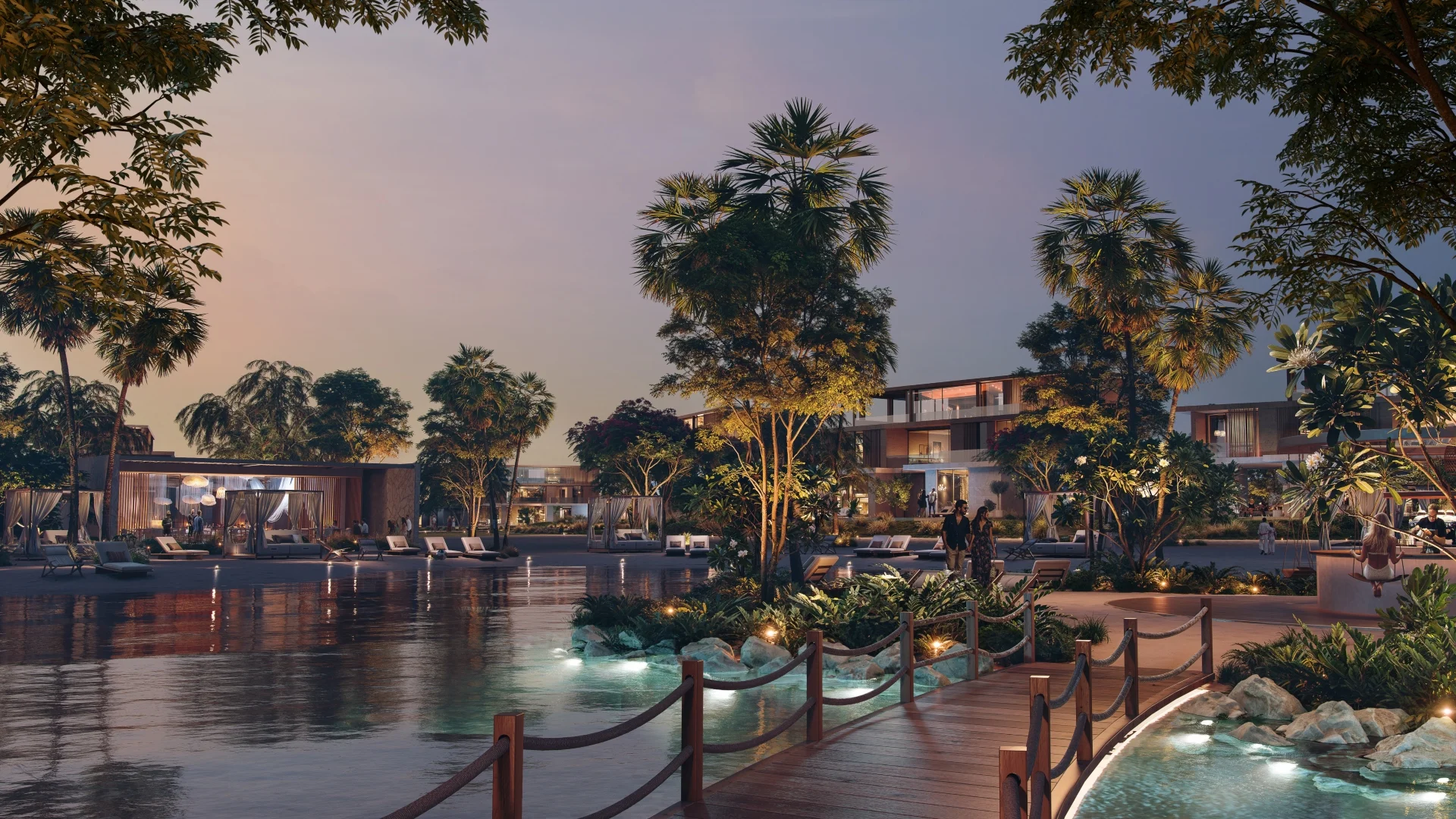
The effort to master how to avoid lakefront hotels water safety risks frequently suffers from a lack of technical depth. Most travelers approach this task by creating a list of basic features: swimming pools, lifeguards, or dock access. Yet, these items provide little insight into the resort’s operational stability or its management of environmental hazards. A pool’s existence matters far less than the quality of its filtration, just as a private dock matters less than its structural integrity during seasonal high-water cycles. How effectively does the resort manage its shoreline accessibility? Is it maintained with science-based hazard identification, or is it merely a veneer of safety over a potentially degrading bank? The most common error in this domain involves the belief that high-end marketing equates to high-end safety. In reality, the most reliable sites often operate with an understated, industrial-grade commitment to infrastructure.
Oversimplification poses the greatest risk for those seeking authentic value. Many guides aggregate diverse properties—ranging from high-intensity recreational retreats to isolated, contemplative lodges—into a single, homogenized set of recommendations. This ignores the vast differences in their mechanical requirements and their social-political contexts. Understanding these resorts requires an audit of their “operational culture.” Does the management prioritize the long-term reliability of its programming, or does it prioritize short-term revenue spikes? By reframing the audit as an assessment of stewardship, you identify the sites that offer a genuinely stable encounter, rather than those that simply offer a fleeting, expensive, and potentially hazardous arrangement of features.
Deep Contextual Background: The Evolution of Waterfront Hospitality
The history of waterfront hospitality follows a path from early, localized extraction to modern, hyper-regulated institutional management. In the nineteenth century, most lake-adjacent sites functioned as industrial nodes—sources of water power, timber transit, or irrigation. The transformation of these sites into residential and recreational hubs represents a relatively recent phenomenon. Often, this change occurred without long-term planning for the resulting environmental stress. As a result, many famous sites today face a crisis of “maintenance debt.” The sheer volume of demand has outstripped the capacity of original, rudimentary infrastructure, necessitating a total overhaul of internal governance.
We have moved into the era of “Institutional Stewardship.” The properties that currently maintain high performance standards have successfully navigated the transition from unregulated service models to complex, managed systems. This requires high-efficiency service modeling, active ecological integration, and sophisticated visitor-flow management. When you research how to avoid lakefront hotels water safety risks, consider the era of the resort’s development. Is it a legacy reservoir lodge struggling to adapt? Does it represent a purpose-built facility designed with modern capacity and sustainability standards? The difference in the quality of daily operations—and the resulting safety profiles—remains profound and predictable.
Conceptual Frameworks and Mental Models
-
The Riparian Resilience Matrix: This model measures a resort’s ability to deliver its promised activities without degrading the safety of the individual guest’s experience through overcrowding.
-
The Operational Redundancy Audit: This framework identifies whether the property can maintain its core service commitments—such as water quality monitoring and dock integrity—during peak demand periods.
-
The Logistical Friction Coefficient: This metric quantifies the difficulty of maintaining specific safety amenities, serving as a proxy for the exclusivity and quality of the resort’s management.
-
The Ecological Integration Score: This evaluates how well the resort’s protocols respect the natural regional hydrology, which acts as a strong indicator of long-term site stability and safety.
Key Categories and Operational Variations
| Category | Typical Infrastructure Profile | Safety Trade-off |
| Institutional Eco-Resorts | Hardened mechanicals; integrated systems | High cost; extreme reliability |
| Heritage-Adaptive Lodges | Restored timber; updated HVAC | High charm; complex supply chains |
| Purpose-Built Modernist | High-efficiency envelopes; minimalist | Excellent value; architectural rigidity |
| Vertical Lakeside Towers | Centralized, dense mechanical systems | Efficient footprint; strata dependency |
Decision Logic: To master the process when you investigate how to avoid lakefront hotels water safety risks, prioritize resorts that demonstrate a clear, science-based approach to water management. If the resort’s operational literature focuses on integrated ecological and safety monitoring, the protocols likely utilize superior, long-term intent.
Detailed Real-World Scenarios
-
The Shoreline Erosion Failure: A resort features a beautiful beach that requires significant annual sand replenishment. During a period of heavy rain, the unmanaged sediment shifts, creating dangerous underwater drop-offs that aren’t marked. Guests encounter these hazards because the resort prioritized aesthetics over shoreline safety documentation.
-
The Dock-Load Bottleneck: A property operates at peak capacity during the summer, exceeding the limits of its legacy boat-access system. Management safety protocols collapse under the volume, showing the danger of prioritizing occupancy over utility capacity and visitor safety.
-
The Water-Quality Delay: A resort relies on local water monitoring, but the testing cycles are too infrequent to detect a sudden bacterial bloom caused by agricultural runoff. Because the property lacks real-time sensing, the entire guest experience is compromised, demonstrating why stable sensing remains a mandatory requirement when you learn how to avoid lakefront hotels water safety risks.
Planning, Cost, and Resource Dynamics
Economic evaluation requires moving beyond the cost of the stay toward the “Total Cost of Engagement” and asset lifecycle maintenance under duress.
| Cost Component | Relative Impact | Variability |
| Base Safety/Maintenance Fee | 40% | Fixed |
| Logistical/Supply Premium | 30% | High |
| Facility Resilience Surcharge | 20% | Variable |
| Contingency Reserve | 10% | Medium |
Note: The properties delivering the best value command a higher premium not for the view, but for the reliability of their maintained safety environments.
The Risk Landscape and Systemic Failure Modes
-
Environmental Encroachment: Properties built too close to the waterline face inevitable erosion-related costs that are almost always passed to the guest in the form of elevated safety risks and facility fees.
-
Maintenance Debt: Properties owned by transient investment groups often suffer from the practice of neglecting mechanical safety repairs to boost short-term revenue, which eventually manifests as a drop in quality for the visitor.
Governance, Maintenance, and Long-Term Adaptation
-
The Forensic Inspection: Before confirming a reservation, request a record of the last major mechanical shoreline overhaul. A management team that treats their facility as a machine is a team you can trust.
-
Performance Triggers: Your booking should include provisions for climate and water-quality transparency. If a hotel cannot meet its safety agreements, the guest should have a predefined pathway for resolution or exit.
-
Layered Maintenance Checklist: Maintain your own record of the asset’s performance. This data provides the feedback loop necessary for long-term consistency in high-stakes environments.
Measurement, Tracking, and Evaluation
-
Leading Indicators: The precision of pre-stay logistical communication regarding safety; the existence of clear, published utility and shoreline protocols.
-
Lagging Indicators: The frequency of safety service interruptions; the variance in water-quality reports across the resort.
-
Documentation: Build a proprietary database of high-performance properties, categorizing them by “Mechanical Reliability” and “Environmental Sensitivity” when you research how to avoid lakefront hotels water safety risks.
Common Misconceptions and Oversimplifications
-
“Lakefront is always better”: Often, a view is purchased at the cost of a compromised building envelope.
-
“Reviews indicate quality”: Subjective reviews capture mood, not mechanical performance or safety asset management.
-
“Historic equals better”: Historic properties require more intensive, and often more fragile, maintenance cycles.
-
“Higher price equals better service”: Price often reflects demand, not the structural integrity of the safety systems.
-
“Modern is safer”: Over-engineered modern systems can be harder to service in remote environments.
-
“Management is autonomous”: Even the best teams are limited by the underlying quality of the infrastructure they manage.
Conclusion
Mastering the process to learn how to avoid lakefront hotels water safety risks effectively requires a fundamental shift in perception—from the aesthetic to the structural. By recognizing these resorts as managed institutional assets rather than passive vacation spots, stakeholders can make decisions grounded in reality rather than aspiration. A property that respects the physics of its environment, invests in operational redundancy, and treats its maintenance cycle with professional rigor is the only true contender for “best-in-class” status. The experience should be defined by its seamlessness, a quality that is only possible when the human-built environment is held to the highest standard of mechanical integrity.