How to Plan Lakefront Hotels Stays on a Budget: Strategic Guide
The perception of a lakefront hotel as an inherently high-cost luxury asset is a structural misunderstanding of the hospitality market. Waterfront properties, while often marketed as premium destinations, are subject to the same fundamental economic laws as any other real estate asset. Their pricing is driven by seasonal demand, utility overhead, and the intense mechanical requirements of shoreline maintenance. When a traveler views a lakefront stay as an unalterable expense, they lose the ability to apply strategic pressure to the procurement process. Budgeting for these locations is not about finding discounts; it is about recognizing the variables that property managers use to stabilize their occupancy.
A rigorous approach requires the traveler to move past the superficiality of standard booking platforms. These systems are designed to maximize revenue for the property, not to optimize expenditure for the guest. To secure a high-quality stay at a controlled cost, one must adopt an analytical framework that accounts for logistical friction, infrastructure stability, and regional market cycles. By deconstructing the costs into manageable components, the traveler can identify where the property has flexibility and where the guest can provide value to the operator in exchange for rate adjustments.
This guide provides a comprehensive methodology for auditing and securing lakeside stays without sacrificing the essential performance requirements of a professional-grade environment. We examine the interplay between facility maintenance cycles and pricing, the logic of regional accessibility, and the long-term planning required to achieve a superior experience at an optimized price point. This analysis serves as a definitive resource for those who recognize that the shore is not just a view, but a complex, managed asset that requires careful navigation to remain affordable.
Understanding how to plan lakefront hotels stays on a budget
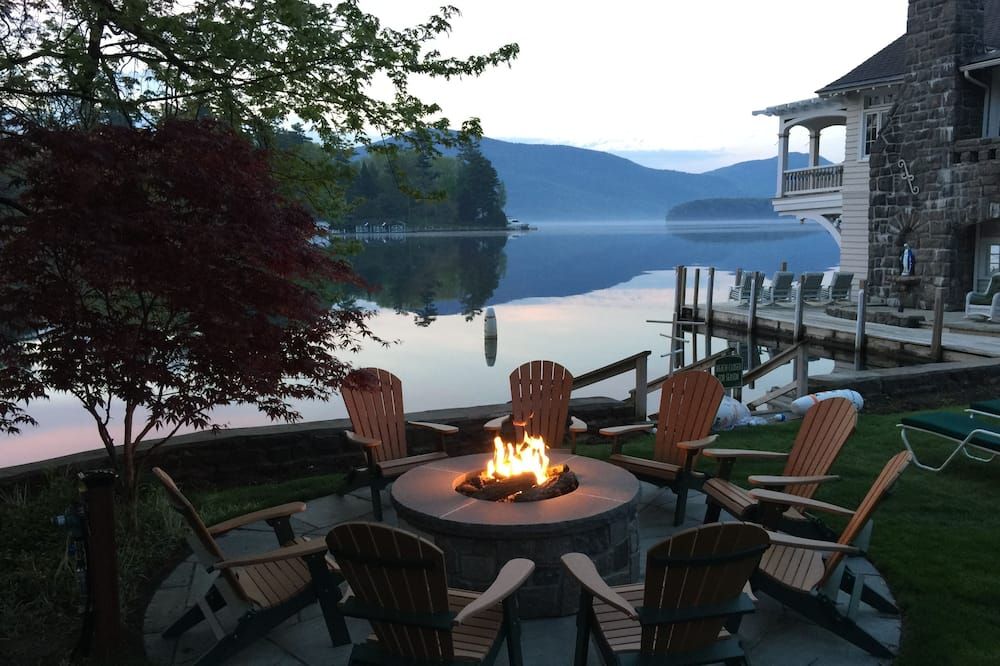
The process of learning how to plan lakefront hotels stays on a budget is often misconstrued as a task of searching for “cheap” rooms. This is a reductive approach that ignores the underlying mechanics of asset management. A low nightly rate on a neglected property can lead to substantial hidden costs, including poor utility performance, limited connectivity, and high transit expenses to access necessary services. Instead of focusing on price alone, one must focus on the “Total Cost of Presence.” This model incorporates the logistical and operational realities of a waterfront location into the overall budget.
The risk of oversimplification is significant. Many travelers prioritize the aesthetic label of “lakefront” while ignoring the structural health of the building. An optimized budget plan targets properties that have already internalized their maintenance costs and can demonstrate high levels of operational reliability. By targeting off-peak operational lulls and utilizing long-term residency agreements, the traveler can negotiate rates that reflect a partnership with the property manager, rather than a transient consumer transaction. This requires a forensic, data-driven approach to negotiation, grounded in a clear understanding of the property’s operational needs.
Deep Contextual Background: The Evolution of Waterfront Economics
The economic history of lakeside hospitality is marked by a transition from “exclusive isolation” to “institutional resilience.” Early lodges were built on land-grant models, prioritizing aesthetic integration but struggling with mechanical efficiency. This led to a boom-and-bust cycle of infrastructure decay. Modern waterfront economics, however, favors properties that have invested in modular utilities and hardened building envelopes. These properties represent a more stable investment for both the owner and the long-term guest.
Understanding this evolution is vital when one explores how to plan lakefront hotels stays on a budget. Assets that invested in modern mechanical infrastructure earlier in their life cycle are often more cost-effective to operate over the long term. They avoid the catastrophic failures that plague legacy assets. Travelers who prioritize these “resilient” properties often find that the initial price premium is offset by the lack of service interruptions and maintenance-related friction. The goal is to identify properties that have moved beyond the “Rustic Lodge” phase and into the “Adaptive Resilience” era of operation.
Conceptual Frameworks and Mental Models
-
The Seasonal Elasticity Model: This framework maps rate fluctuations against the property’s maintenance cycle, identifying “shoulders” where demand is low but staffing is optimized.
-
The Infrastructure Load Assessment: This evaluates whether a property has optimized its mechanical systems, identifying assets that are lower-cost to run and, therefore, more amenable to rate negotiation.
-
The Operational Redundancy Index: A tool for determining how much of a property’s “premium” is simply a surcharge for the lack of service independence; high-redundancy properties often provide better long-term value.
-
The Logistical Friction Coefficient: A metric that calculates the real-world cost of reaching and maintaining a stay at a property, allowing for a more accurate comparison of “budget” options.
Key Categories and Operational Variations
| Category | Typical Infrastructure Profile | Resident Trade-off |
| Institutional Eco-Resorts | Hardened, tech-heavy mechanicals | Higher base cost; high reliability |
| Adaptive-Reuse Lodges | Heritage timber; rustic finish | Low maintenance; high utility drift |
| Purpose-Built Modernist | High-efficiency envelopes; minimalist | Excellent value; architectural rigidity |
| Vertical Lakeside Towers | Centralized, dense mechanical systems | Efficient footprint; high strata fees |
Decision Logic: When determining how to plan lakefront hotels stays on a budget, start by categorizing the asset. If an asset is a “Legacy Liability,” avoid it, as its operating costs are too unpredictable. Target “Purpose-Built Modernist” or “Institutional Eco” assets during their shoulder seasons to achieve the best performance-to-cost ratio.
Detailed Real-World Scenarios
-
The Maintenance Lull Advantage: A professional books a month-long residency during the resort’s secondary maintenance cycle. Because the facility is already fully staffed and maintained, the hotel agrees to a discounted rate to ensure occupancy, resulting in a 35% savings over the peak summer rate.
-
The Utility-Drift Failure: A budget-conscious traveler books a low-rate room in a property lacking modern moisture control. Within days, the air quality degrades, requiring the traveler to invest in air purification and supplementary climate equipment, quickly eliminating the initial savings.
-
The Network Reliability Hedge: A firm books a residency in a property that offers “guaranteed bandwidth” for professional use. While the rate is higher than a local budget motel, the avoidance of connectivity-related downtime ensures the stay is economically superior.
Planning, Cost, and Resource Dynamics
The economic management of lakeside stays requires a focus on long-term residency metrics rather than nightly rates.
| Cost Component | Relative Impact | Variability |
| Base Reservation Rate | 50% | Medium |
| Environmental/Utility Premium | 20% | High |
| Logistics/Accessibility Surcharge | 20% | Variable |
| Systemic Risk Reserve | 10% | Fixed |
Note: The most effective method for how to plan lakefront hotels stays on a budget involves locking in fixed-term agreements that insulate the traveler from seasonal rate volatility.
The Risk Landscape and Systemic Failure Modes
-
Environmental Degradation: Properties located on highly reactive lakefronts may suddenly increase costs due to emergency repairs, which are often passed to the guest.
-
Management Instability: Properties managed by transient investment groups often sacrifice long-term maintenance for short-term revenue, creating an unreliable and risky stay.
Governance, Maintenance, and Long-Term Adaptation
-
The Forensic Move-In: Before confirming, request an audit of the facility’s mechanical maintenance history. A management team that understands its facility is a management team that can be negotiated with.
-
Performance Triggers: Ensure your agreement includes clear, enforceable standards for utility and climate-control performance, providing a basis for cost-adjustment should the asset fail to perform.
-
Layered Maintenance Checklist: Maintain your own record of the asset’s performance. This data is the primary leverage required to maintain budget-friendly terms during future negotiations.
Measurement, Tracking, and Evaluation
-
Leading Indicators: The precision of pre-stay logistical support; the clarity of the property’s emergency mechanical protocols.
-
Lagging Indicators: The frequency of service interruptions; the stability of water and energy performance throughout the stay.
-
Documentation: Build a proprietary database of high-performance properties that respect your budget parameters, categorizing them by mechanical reliability and operational flexibility.
Common Misconceptions and Oversimplifications
-
“Rack rates are firm”: In the waterfront sector, rack rates are merely suggestions for those who lack the data to negotiate effectively.
-
“High-end finishes equate to high-end performance”: Aesthetics often mask failing mechanical systems that will drive up your total costs.
-
“Short-term stays are more economical”: Long-term residency agreements provide significantly more leverage for reducing costs through bulk-rate negotiations.
-
“Reviews capture operational value”: Online reviews capture subjective feelings; they rarely capture objective mechanical or economic reality.
-
“Smart technology ensures reliability”: In remote areas, overly complex “smart” systems are often liabilities rather than assets.
-
“Maintenance is a management responsibility”: If management fails, the lack of maintenance becomes the traveler’s financial and logistical problem.
Conclusion
Understanding how to plan lakefront hotels stays on a budget is an exercise in structural discipline. One must strip away the marketing veneer to reveal the underlying economic and mechanical machine of the property. When the traveler treats the reservation process as a procurement project rather than a consumer choice, they gain the ability to navigate the volatility of the waterfront market. By prioritizing assets that have internalized their operational requirements and by aligning one’s needs with the property’s natural economic cycles, high-performance residency becomes achievable at a controlled cost. The shore should be a foundation for the traveler’s goals, not a drain on their resources, and this requires a shift toward deliberate, data-backed residency strategies.