Best Lakefront Hotels Options: A Strategic Residency Guide
The pursuit of an ideal lakeside retreat often feels like a simple matter of taste. In reality, selecting a high-performance waterfront property requires complex risk management. Inland water bodies possess distinct hydrologic personalities. These personalities dictate the operational reality of any hospitality asset. For the sophisticated stakeholder, the “water view” serves as the least significant variable.
True quality in this sector stems from structural and operational resilience. A lakeside property must contend with systemic environmental stressors. These stressors include seasonal moisture loading, sediment stability, and complex riparian regulations. When managers effectively control these variables, the guest experiences a restorative stay. However, when owners ignore the underlying infrastructure, the visitor encounters friction. This friction appears as maintenance delays, poor air quality, or restricted access.
This guide moves beyond promotional travel industry jargon to conduct a forensic examination. We analyze the technical standards and governance models that distinguish elite hospitality assets. We provide a definitive reference for those navigating this complex asset class. The goal involves moving past the allure of the water. Instead, we seek a deeper understanding of what makes a lakeside residency truly perform.
Understanding best lakefront hotels options
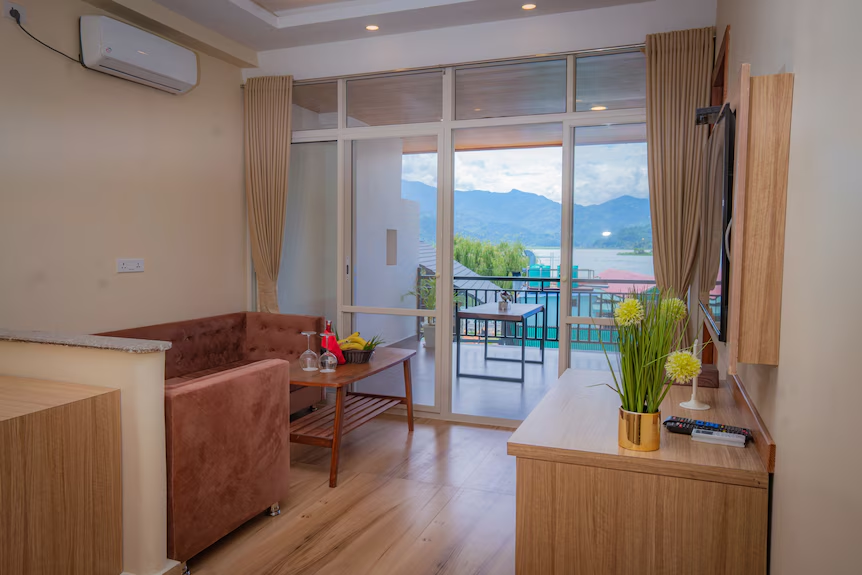
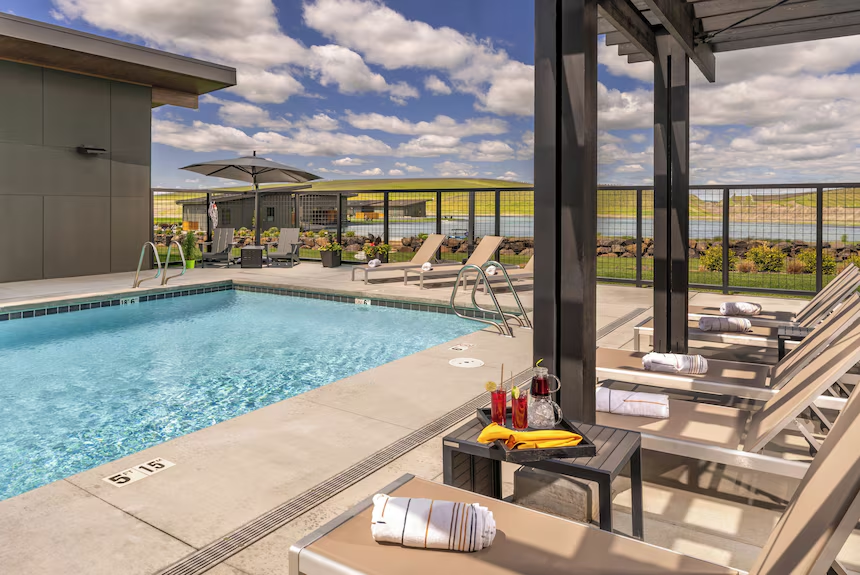
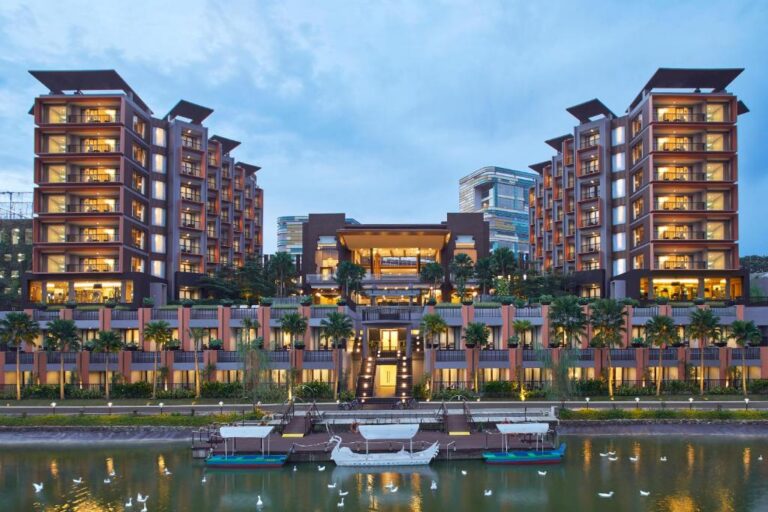
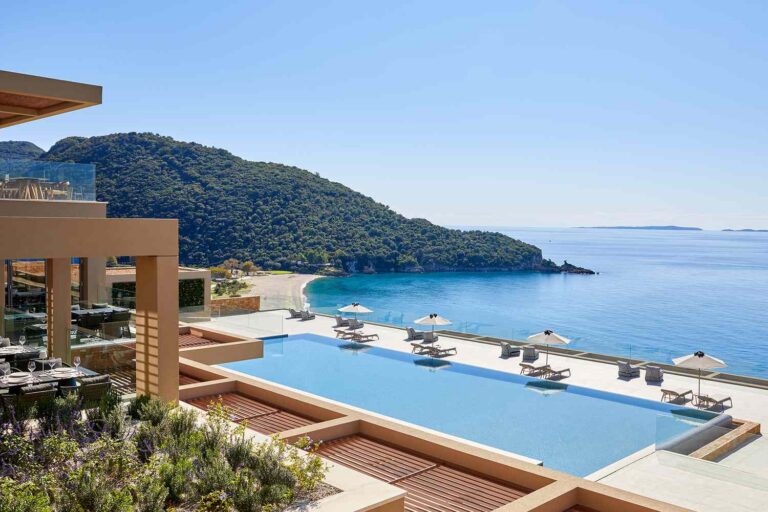
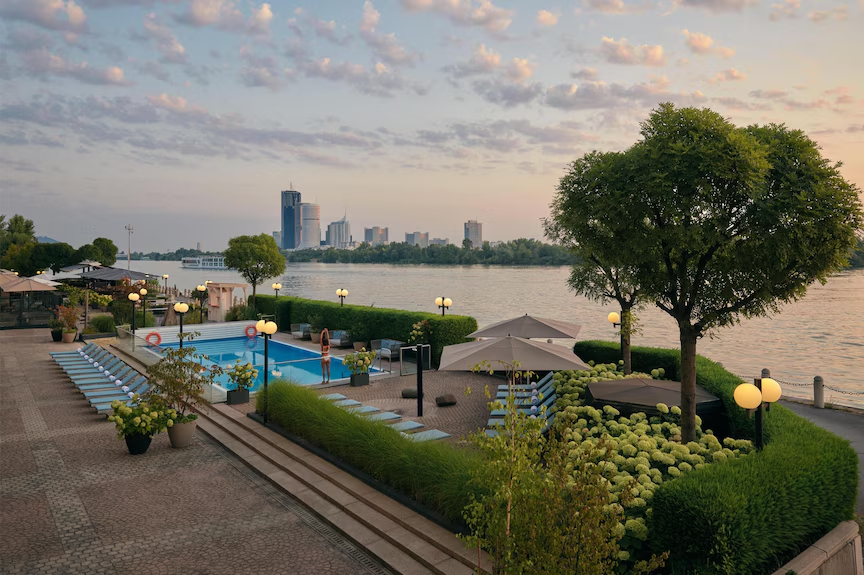
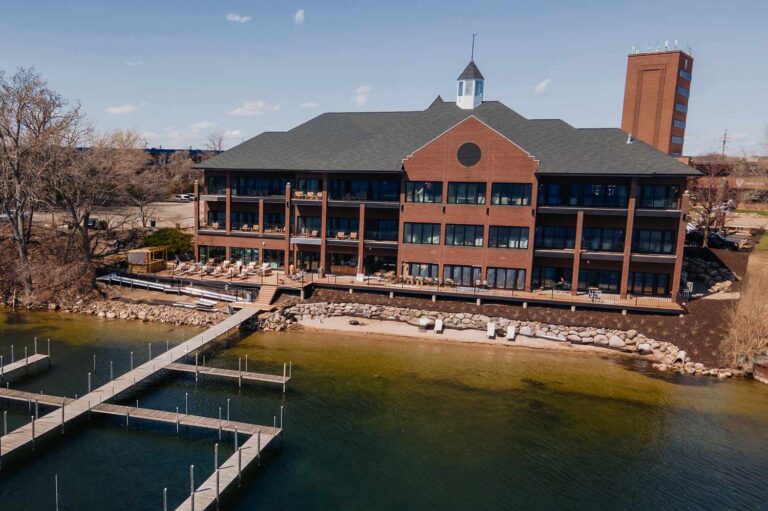
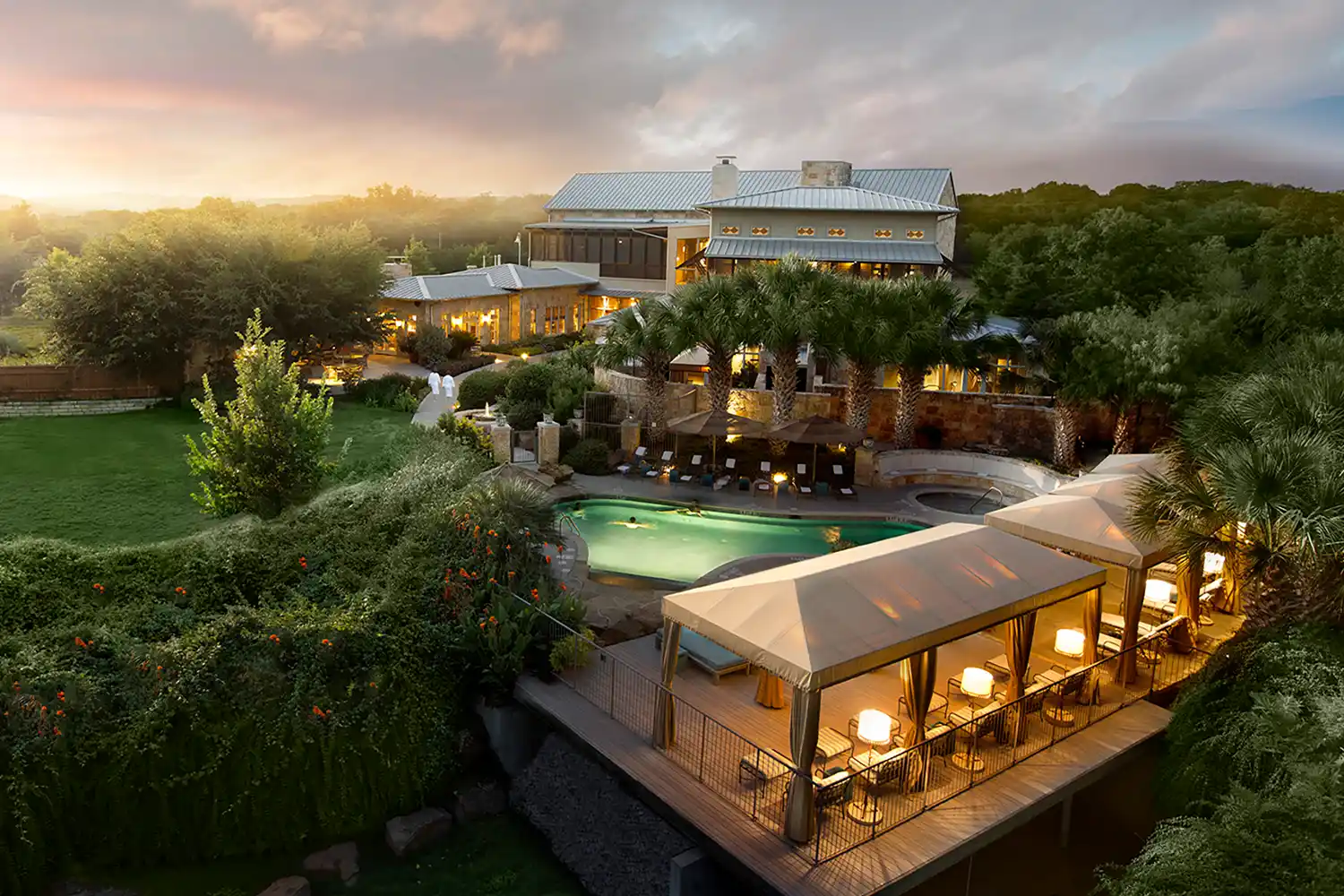
When the market evaluates the best lakefront hotels options, it often falls into the “Vacation Fallacy.” This error assumes that because a location remains peaceful, the property management is equally serene. In practice, the opposite is frequently true. A remote, water-adjacent hotel faces heightened logistical challenges. These challenges require more intensive management than urban equivalents. The most sophisticated observers look past curated photography. They investigate the property’s operational independence instead. Can the facility maintain climate control during humidity spikes? Does it manage its own utility requirements effectively?
One must guard against the oversimplification of “luxury.” A high nightly rate often funds the aesthetic presentation of a property. However, it does not guarantee mechanical integrity. The truly superior options in this category invest in hardening their physical plant. They protect themselves against the unique corrosiveness of lake-edge environments. These properties employ teams that understand the interplay between ecology and guest demand. To identify the best candidates, you must approach the property as an operations expert. You should audit its response to the stressors of its context.
Deep Contextual Background: The Evolution of Waterfront Residency
The trajectory of American lakefront hospitality has moved through several distinct phases. Each phase represents a different relationship with the landscape. The early twentieth-century model featured the “Grand Lodge.” This structure emphasized massive, timber-heavy construction and an immediate proximity to the water. These properties served seasonal, transient crowds. Yet, they lacked the mechanical systems required for the high-intensity occupancy of the modern professional era.
We have now entered the “Institutional Resilience” phase. The contemporary marketplace demands properties that function as nodes for deep recovery and high-output work. This shift has forced a massive capital injection into the sector. Developers now prioritize properties that possess robust mechanical backbones. The evolution is not merely architectural; it is logistical. Modern top-tier options utilize sophisticated water-management systems and redundant power arrays. Furthermore, they promote a service culture built on the assumption that remote locations should not impede seamless living.
Conceptual Frameworks and Mental Models
-
The Riparian Resilience Matrix: This model measures a property’s ability to withstand shoreline evolution, including sediment migration and water-level volatility.
-
The Operational Independence Coefficient: This score determines a facility’s reliance on external infrastructure. A higher score reflects a greater ability to maintain standards during utility failures.
-
The Climate-Control Load Assessment: This examines the energy required to maintain thermal equilibrium in buildings subjected to lake-induced microclimates.
-
The Accessibility-Friction Index: This quantifies the logistical difficulty of bringing resources and staff to the property. This index directly impacts service delivery consistency.
Key Categories and Operational Variations
| Category | Typical Infrastructure Profile | Resident Trade-off |
| Institutional Eco-Resorts | Hardened mechanicals; integrated systems | Lower isolation; higher cost |
| Boutique Lake-Lofts | High-aesthetic; adaptive-reuse focus | Maintenance-heavy; high service variance |
| Vertically Integrated Lodges | Massive service pool; onsite engineering | Reduced autonomy; community presence |
| Rugged-Terrain Estates | Extreme privacy; high-tech redundancy | High logistical friction; self-managed |
Decision Logic: When auditing the best lakefront hotels options, prioritize properties that demonstrate a “Maintenance-First” culture. If the property’s management emphasizes preventative facility care, it serves as a leading indicator of long-term reliability.
Detailed Real-World Scenarios
-
The Humidity-Saturation Failure: A high-end property uses floor-to-ceiling glass to capture a lake view. During high-moisture seasons, the building’s air-handling units prove inadequate. This leads to internal condensation and poor air quality. The root cause is prioritizing visual design over mechanical capability.
-
The Logistical Isolation Lock: A resort in a protected watershed zone relies on a single access road. A localized storm damages the road, cutting off supply lines for an extended period. The failure mode is a lack of on-site resource redundancy.
-
The Riparian Regulatory Freeze: A property attempts to renovate its dock infrastructure but fails to account for overlapping jurisdictional authorities. The project remains unfinished for years, creating a functional blight.
Planning, Cost, and Resource Dynamics
Economic planning for a high-performance lakeside stay must account for “Environmental Friction.” This represents the cost of managing the property’s relationship with its site.
| Cost Component | Relative Budget Impact | Flexibility |
| Base Lease/Reservation Rate | 55% | Medium |
| Logistical/Supply Surcharge | 15% | High |
| Infrastructure/Resilience Premium | 20% | Fixed |
| Service Escalation/Contingency | 10% | Variable |
Note: The most fiscally robust strategy involves negotiating service-level agreements. These should explicitly define the hotel’s responsibility for maintaining connectivity during environmental events.
The Risk Landscape and Systemic Failure Modes
-
Mechanical Corrosion: Mineral-rich mist common to many large lakes can oxidize electrical connections. It also accelerates the degradation of sensitive HVAC equipment.
-
Management Transition Risk: Many waterfront properties change hands. New investment groups often prioritize short-term profit over the expensive maintenance required by such fragile environments.
Governance, Maintenance, and Long-Term Adaptation
-
The Forensic Move-In: Before committing, verify the status of the building’s mechanical systems. Request evidence of recent HVAC balancing and network redundancy testing.
-
The Operational Dossier: Keep a record of all interactions with property management regarding facility maintenance. If you stay long-term, this documentation ensures service levels remain high.
-
Site-Adaptation Triggers: Identify clear thresholds for unacceptable performance. For example, define a 10% variance in climate control as a trigger for management intervention.
Measurement, Tracking, and Evaluation
-
Leading Indicators: The precision with which management handles technical inquiries; the visibility of onsite maintenance staff; the clarity of emergency protocols.
-
Lagging Indicators: Total time spent resolving maintenance issues; the variance in utility costs; the consistency of water and electricity during high-demand periods.
-
Documentation: Maintain a Performance Log for every extended stay. Catalog any technical failures to determine if the property remains suitable for future use.
Common Misconceptions and Oversimplifications
-
“Natural silence is a feature”: Lakeside quiet is often interrupted by the mechanical hum of climate-control systems.
-
“High-end finishes imply high-end infrastructure”: Many buildings feature marble countertops alongside failing, antiquated plumbing.
-
“One size fits all”: The best lakefront hotels options offer modular environments that adapt to your specific work or rest requirements.
-
“Reviews are neutral”: Reviews are almost universally skewed by aesthetic experiences. They frequently ignore operational performance.
-
“Smart technology is robust”: In remote environments, “smart” devices become liabilities if the building’s local network lacks physical hardening.
-
“Concierge is for errands”: In remote properties, the concierge acts as a critical link in the site’s security and resource management.
Conclusion
The selection of the best lakefront hotels options is a strategic procurement process. One must abandon the “vacationer” mindset. By viewing the residence as a node in a professional-grade network, the user mitigates the risks of geographic isolation. Success in this domain relies on a property’s ability to remain invisible as a support system. When the mechanicals stay quiet and the connectivity remains redundant, the isolation becomes a powerful tool. In a distracted world, securing a lakeside base of operations that performs with the reliability of an office represents a rare competitive advantage.