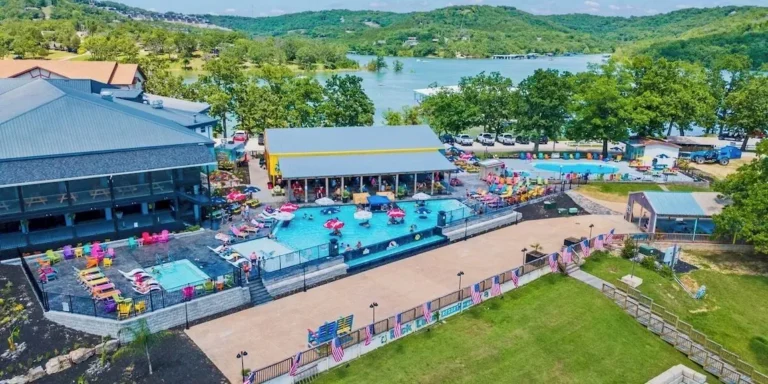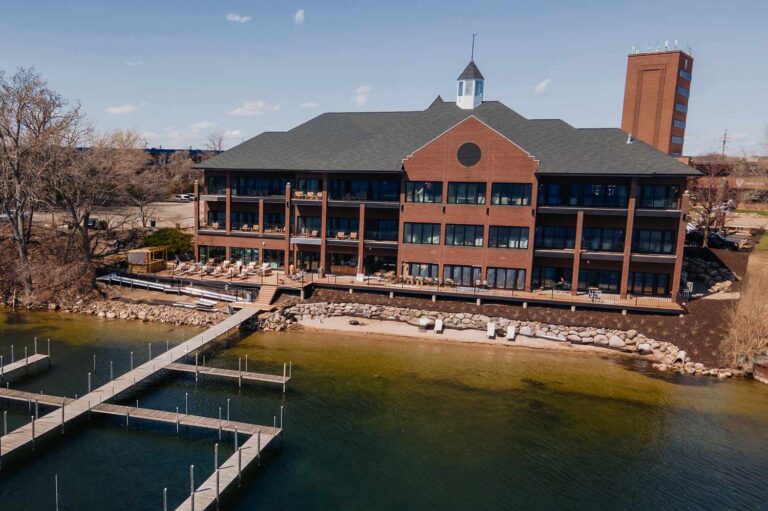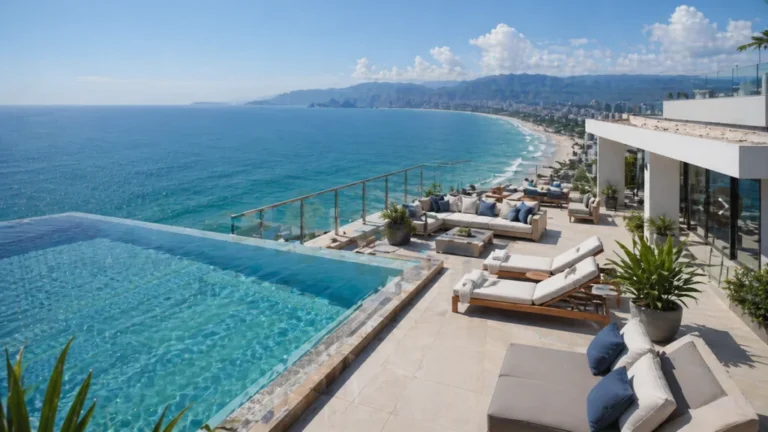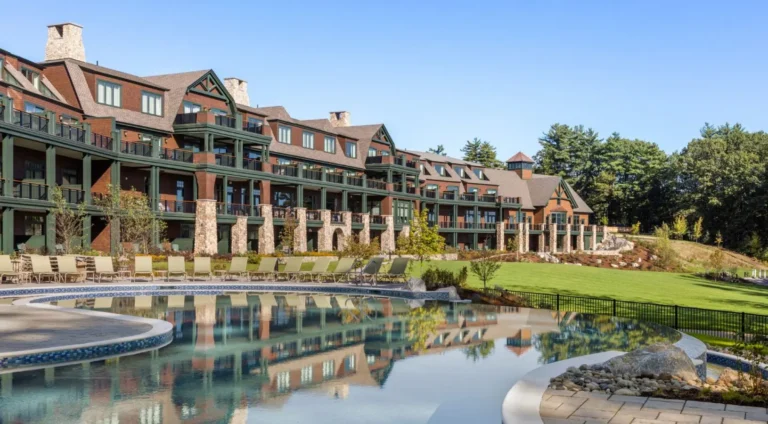
Best Lakefront Hotels for Corporate Hosting: A Forensic Audit
The modern corporate retreat has migrated from the sterile confines of urban conference centers toward environments that prioritize psychological decompression and ecological immersion. Waterfront properties offer a unique proposition in this transition. They provide a high-contrast backdrop—a fusion of serene horizons and high-stakes business objectives. Yet, this pairing is rarely as seamless as marketing materials suggest. A lakefront location introduces significant logistical volatility. It challenges the fundamental requirements of professional productivity: reliable connectivity, structural climate control, and rapid emergency accessibility.
Selecting a venue for professional use is rarely about the scenery alone. It requires a cold, analytical assessment of “site readiness.” Many lakefront properties, while visually arresting, function as legacy assets. They may struggle with moisture-induced hardware failure, inadequate bandwidth for large-scale synchronization, or structural layouts that prioritize aesthetics over acoustic and collaborative efficiency. To host a successful retreat, one must evaluate the property not merely as a hotel, but as a critical piece of business infrastructure. The professional host looks past the surface; they interrogate the mechanical resilience, the institutional governance, and the environmental adaptability of the host facility.
This audit-based approach serves as the foundation for high-performance hosting. It shifts the planning paradigm from “event management” to “infrastructure validation.” By applying a forensic lens to site selection, organizers can mitigate the compounding risks of remote operations. We examine the evolution of these sites, the mental models required to evaluate their viability, and the systemic failure modes that often derail otherwise well-funded initiatives. This analysis provides a blueprint for those who require their corporate environments to be as robust and capable as the teams they host.
Understanding best lakefront hotels for corporate hosting
The search for the best lakefront hotels for corporate hosting is frequently compromised by a misunderstanding of what “connectivity” truly means in a remote environment. It is not merely the presence of a Wi-Fi signal. It is the existence of redundant backhauls, low-latency performance during high-bandwidth events, and the ability to maintain these services through regional atmospheric disturbances. Many properties advertise “high-speed access” while relying on fragile, single-point-of-failure infrastructure that collapses under the load of a sixty-person workshop.
Furthermore, oversimplification is a pervasive professional risk. Organizers often treat lakefront retreats as uniform products. They assume that if a hotel has a conference room and a view, it is fit for purpose. This ignores the “moisture-loading” reality of waterfront construction. High-end computing equipment, sensitive audiovisual systems, and human cognitive performance all suffer in poorly climate-controlled, damp, or acoustically porous environments. Identifying the best lakefront hotels for corporate hosting requires an audit of the facility’s specific engineering—how it manages temperature, humidity, and the transition from the uncontrolled outdoor space to the highly controlled indoor meeting space.
Deep Contextual Background: The Evolution of Waterfront Business Hospitality
Corporate hosting has transitioned through three distinct phases: the “Urban Central” era, characterized by convenience and mass-transportation hubs; the “Resort Luxury” era, which prioritized the aesthetic and recreational appeal of destination travel; and the current “Institutional Stewardship” era. The latter is defined by a shift toward data-driven reliability. Modern organizations no longer accept the “rustic charm” excuse for failing to provide stable electricity or cellular coverage.
We now see a bifurcation in the market. Legacy lakefront properties often struggle to bridge the gap between their aesthetic heritage and modern utility requirements. They suffer from “maintenance debt”—the compounding cost of upgrading legacy sewage, electrical, and data-handling systems to meet contemporary corporate standards. Conversely, purpose-built modern retreats are beginning to emerge. These facilities integrate industrial-grade networking and climate systems into the architectural design itself. The professional organizer must navigate this divide, favoring properties that have intentionally invested in the invisible, high-performance infrastructure that sustains modern, tech-enabled corporate gatherings.
Conceptual Frameworks and Mental Models
-
The Latency-Resilience Audit: This measures the property’s bandwidth stability. Does the resort have multiple internet service providers? Are there load-balancing systems to prevent drops during peak hours?
-
The Environmental-Control Baseline: This evaluates the property’s HVAC capacity. Can it maintain a consistent 70°F and 40% humidity level for a room of 50 people, despite the surrounding lake air?
-
The Logistical-Friction Index: A metric for calculating the effort required to move attendees, equipment, and resources from the nearest major transit node to the facility. High friction equals high risk of schedule collapse.
-
The Architectural-Acoustic Barrier: This assesses the degree of sound isolation in meeting spaces. Are the rooms designed for privacy, or are they mere glass-walled cages that amplify distraction?
Key Categories and Operational Variations
| Category | Infrastructure Profile | Primary Advantage |
| Tech-Hardened Enclave | Redundant fiber, climate-isolated spaces | Predictability and high productivity |
| Heritage-Adaptive Estate | Aesthetic depth; updated retro-fit systems | Strong culture-building, higher maintenance risk |
| Satellite-Reliant Retreat | Minimalist; extreme off-grid focus | Unparalleled psychological reset |
| Multi-Use Regional Hub | Large-scale; professional service staff | Standardized reliability; less privacy |
Decision Logic: To determine the best path forward, organizers must prioritize “fail-safe” criteria. If a meeting involves sensitive strategy, an “isolated retreat” without hardened data security is a high-risk liability. If the goal is team cohesion, the “Heritage-Adaptive” property may provide the necessary atmosphere, provided the organizer validates the HVAC and bandwidth metrics first.
Detailed Real-World Scenarios
-
The Bandwidth Collapse: A company hosts a strategy session at an isolated, picturesque resort. During a key presentation, a regional weather event knocks out the primary satellite link. The lack of a terrestrial-fiber backup renders the meeting room effectively analog. This highlights the risk of selecting a venue based on its “aesthetic” rather than its “data-connectivity roadmap.”
-
The Humidity Ingress Crisis: A firm brings expensive VR hardware to a high-end, lakeside villa. The villa lacks specialized dehumidification. Over a three-day session, the hardware begins to exhibit sensor drift and connectivity issues due to atmospheric moisture. This demonstrates the necessity of auditing the venue’s climate-control specifications prior to equipment deployment.
-
The Logistical Bottleneck: An organizer selects a venue that requires a two-hour shuttle ride from the airport. A minor regional traffic incident delays the shuttle, causing the entire opening session to be scrapped. This failure is a direct consequence of choosing a site with an excessive logistical friction coefficient.
Planning, Cost, and Resource Dynamics
Economic evaluation requires looking beyond the “per-head” room rate to assess the total cost of ownership for the retreat’s success.
| Cost Variable | Impact on Long-term Value | Variability |
| Professional-Grade Bandwidth | Critical | High |
| Climate-Control Stability | High | Extreme |
| Logistical Redundancy | High | Medium |
| Facility-Specific A/V Support | Moderate | Low |
Note: The best lakefront hotels for corporate hosting consistently demonstrate high transparency regarding these utility costs, allowing the host to factor them into a realistic budget early in the planning phase.
The Risk Landscape and Systemic Failure Modes
-
Institutional Inflexibility: Large resorts often operate with rigid service hierarchies. If the corporate retreat requires a late-night workspace access or non-standard food service, the resort’s bureaucratic “no” can stall the entire agenda.
-
Utility Fragility: Waterfront regions often suffer from seasonal power grid instabilities. A lack of onsite, automatic-start-generator capability is an immediate failure point for any high-tech corporate event.
-
Regulatory Fragility: Zoning and environmental regulations in lakefront zones are often complex. A resort that has failed to keep its permits updated may face sudden, forced changes to its operational ability or capacity.
Governance, Maintenance, and Long-Term Adaptation
-
The Forensic Site Audit: Before finalizing a contract, request a “Technical Infrastructure Disclosure.” A professional venue will be able to document its internet service providers, power-backup systems, and climate-control specifications.
-
Adjustment Triggers: Define clear “go/no-go” criteria. If a venue cannot guarantee, in writing, specific bandwidth speeds during concurrent user access, it should be removed from the candidate list immediately.
-
Layered Maintenance Checklist: Track the facility’s performance across multiple events. A venue that solves one issue—such as a previous room-temperature variance—and documents the solution is a venue that is learning and adapting.
Measurement, Tracking, and Evaluation
-
Leading Indicators: The speed and accuracy of the venue’s technical-support team when answering specific, granular inquiries about infrastructure capacity.
-
Lagging Indicators: The rate of “infrastructure-related complaints” (e.g., connectivity, HVAC, noise) logged by participants post-retreat.
-
Documentation: Maintain a “Retreat Performance Ledger.” Record the specific meeting room used, the number of devices connected, and the stability of the environmental and technical systems during the event. This becomes the ultimate reference for future bookings.
Common Misconceptions and Oversimplifications
-
“Rustic equals relaxing”: Rustic can often mean “unstable.” Reliability is the only true form of relaxation in a professional context.
-
“High-end means tech-ready”: Luxury in décor and luxury in systems are two entirely different business models.
-
“The venue handles the tech”: Third-party vendors are often required, and venues may actively obstruct their integration to protect their own, inferior, in-house services.
-
“Off-season is purely a cost saving”: Off-season often implies reduced staffing, limited facility heating/cooling, and lower overall operational readiness.
-
“The review score tells the truth”: Most reviews focus on the quality of the brunch and the softness of the pillows, not the uptime of the conference room fiber.
-
“Proximity to the water is a neutral feature”: It is a significant environmental challenge that dictates the mechanical life expectancy of every device in the building.
Conclusion
Determining the best lakefront hotels for corporate hosting requires a shift from passive consumerism to rigorous institutional analysis. The professional organizer treats the venue as a strategic asset, one that must be audited for mechanical, technical, and logistical integrity before a single contract is signed. While the aesthetic allure of a waterfront vista can enhance morale and facilitate creative breakthroughs, it must be supported by a hidden, robust architecture of reliability. A successful corporate retreat at the water’s edge is not a gamble on scenery; it is a calculated deployment into a managed environment, where the hotel serves as a silent, invisible partner in the success of the mission.