How to Manage Lakefront Hotels Reservations: A Strategic Guide
The management of waterfront hospitality assets demands a radical departure from standard reservation protocols. While the travel industry emphasizes the aesthetic allure of the view, the professional operator or the high-output traveler must focus on the underlying infrastructure. Waterfront properties function as complex, site-sensitive machines. They exist within a dynamic hydrological zone that imposes constant pressure on building envelopes, mechanical systems, and utility conduits. Ignoring these environmental stressors leads to operational friction, which often manifests as maintenance delays or, in severe cases, the temporary unavailability of the asset itself.
True mastery of this sector involves shifting from a consumer perspective to a structural procurement methodology. Every reservation must be approached as a negotiation for service reliability. One must consider the interplay between seasonal water levels and the availability of essential site services. In high-humidity environments, for example, the performance of climate-control systems dictates the actual livability of the space. A booking that fails to account for these technical dependencies is essentially an unmanaged risk.
This guide provides a forensic examination of the waterfront reservation landscape. We move beyond the promotional vernacular of the hospitality sector to address the systemic realities of building performance and site management. By establishing a rigorous evaluative framework, we provide a definitive reference for those tasked with securing high-performance stays. The objective is to ensure that the selection of a property functions as a deliberate, data-driven action, rather than an impulsive decision based on surface-level visual appeal.
Understanding how to manage lakefront hotels reservations
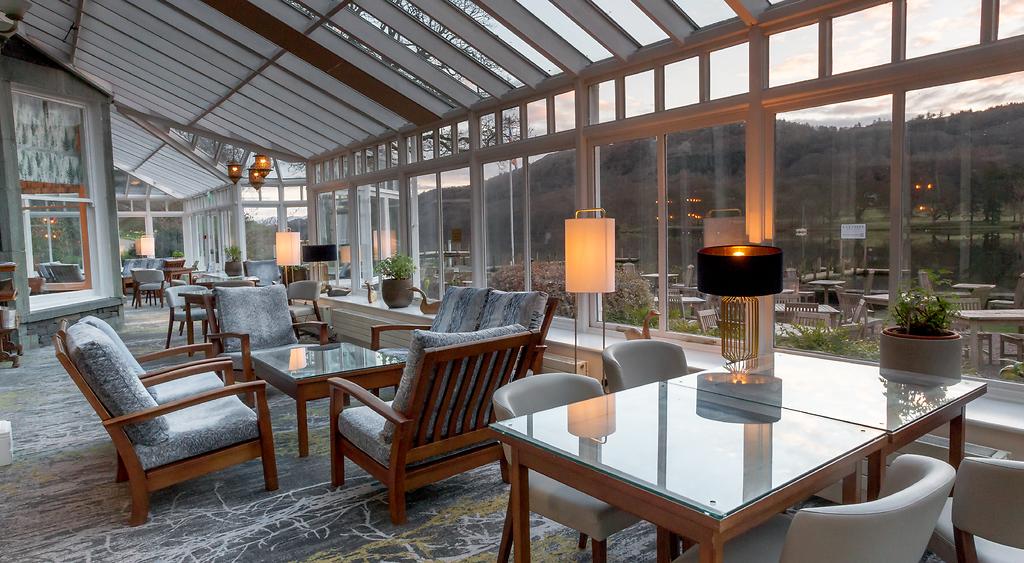
The process of learning how to manage lakefront hotels reservations is frequently misconstrued as a administrative task of confirmation and scheduling. In practice, it involves the active stewardship of a logistical chain. One must recognize that a waterfront property is not a static object; it is a node within a sensitive ecological system. Reservations must account for the reality that the environment can—and often does—alter the operational capacity of the facility. The risk of oversimplification remains profound; travelers often prioritize the location’s prestige while ignoring its technical vulnerabilities.
Effective management requires a forensic audit of the hotel’s readiness. Does the facility maintain a robust preventive maintenance schedule for its HVAC and water-treatment systems? How does the management team communicate during weather-related utility interruptions? By reframing the reservation process as an audit of these operational capabilities, the user can mitigate the risk of systemic failure. This approach requires the requester to look past the marketing imagery. One must prioritize evidence of facility stability and clear communication protocols over the superficial promise of a “perfect” view.
Deep Contextual Background: The Evolution of Waterfront Hospitality
The historical trajectory of lakeside resort development reveals a transition from simple, rustic structures to institutionalized, tech-dependent complexes. Early twentieth-century lodges relied on local materials and manual climate regulation. These properties, while iconic, lacked the mechanical sophistication required for the intense, year-round occupancy patterns seen today. Following this, the mid-century “mass-tourist” phase pushed for volume. This period resulted in the construction of large-scale assets that now face significant structural and utility-related obsolescence.
We have moved into the era of “Adaptive Resilience.” Modern stakeholders understand that the value of an asset ties directly to its mechanical durability. Contemporary design focuses on high-efficiency building envelopes, modular internal systems, and bio-filtration utilities. This evolution is critical for anyone interested in how to manage lakefront hotels reservations efficiently. Knowing the age and technological generation of the property allows you to anticipate potential failures. A legacy lodge may offer historical charm but lack the humidity control necessary for professional or long-term productivity.
Conceptual Frameworks and Mental Models
-
The Riparian Resilience Matrix: This model measures the property’s ability to survive shoreline evolution, including sediment migration and rising water levels.
-
The Operational Redundancy Audit: This framework identifies whether the property possesses its own power generation, water filtration, or climate-stabilization systems in the event of regional failure.
-
The Accessibility-Friction Index: This metric quantifies the logistical difficulty of bringing external support (contractors, specialized staff) to the property in the event of an operational crisis.
-
The Ecological Integration Score: This evaluates how the facility’s footprint respects the water’s edge, which serves as a proxy for the long-term sustainability of the permit and operational license.
Key Categories and Operational Variations
| Category | Typical Infrastructure Profile | Resident Trade-off |
| Institutional Eco-Resorts | Hardened mechanicals; integrated systems | Higher price; less personal autonomy |
| Adaptive-Reuse Lodges | Heritage timber; rustic finish | High humidity risk; erratic utility stability |
| Purpose-Built Modernist | High-efficiency envelopes; minimalist | Lower square footage; architectural rigidity |
| Vertical Lakeside Towers | Centralized, dense mechanical systems | High strata fees; limited privacy |
Decision Logic: When auditing the logistics of how to manage lakefront hotels reservations, prioritize properties that demonstrate a “Maintenance-First” culture. If the property’s management emphasizes preventive facility care, it serves as a leading indicator of an asset that will reliably support an extended stay.
Detailed Real-World Scenarios
-
The Thermal Inversion Trap: A resort utilizes floor-to-ceiling glass to capture a lake view but fails to account for night-time lake-effect cooling. The result is massive energy consumption and uneven indoor temperatures. This failure originates in poor site-orientation planning.
-
The Septic Load Failure: A property operating at maximum capacity during a peak season pushes its ancient, on-site waste-treatment system beyond capacity. This leads to an emergency facility closure. This illustrates the second-order effect of prioritizing booking volume over infrastructure capacity.
-
The Network Isolation Cascade: During a regional storm, the hotel’s internal mesh networking fails because it relies on non-redundant local hardware. Guests lose connectivity despite the primary ISP line remaining active. This failure mode stems from a lack of hardware-level redundancy.
Planning, Cost, and Resource Dynamics
Economic success requires moving beyond simple rate calculations. One must adopt a “Total Cost of Presence” methodology that accounts for the environmental costs of operating at the water’s edge.
| Cost Component | Relative Budget Impact | Flexibility |
| Base Lease/Reservation Rate | 55% | Medium |
| Logistical/Supply Surcharge | 15% | High |
| Infrastructure/Resilience Premium | 20% | Fixed |
| Service Escalation/Contingency | 10% | Variable |
Note: The most fiscally prudent approach involves negotiating agreements that explicitly define the hotel’s responsibility for maintaining utility performance during environmental events.
The Risk Landscape and Systemic Failure Modes
-
Mechanical Corrosion: The saline or mineral-rich mist common to large lakes can oxidize electrical connections. This accelerates the degradation of sensitive HVAC equipment.
-
Management Transition Risk: Many waterfront properties are sold to investment groups that prioritize short-term profit over the expensive, ongoing maintenance required by such fragile environments.
Governance, Maintenance, and Long-Term Adaptation
-
The Forensic Move-In: Before confirming a stay, verify the building’s mechanical health. Request evidence of recent HVAC balancing and network redundancy testing.
-
The Operational Dossier: Maintain a record of all interactions with property management regarding facility maintenance. If you are staying long-term, this documentation serves as your primary leverage in ensuring service levels are maintained.
-
Site-Adaptation Triggers: Identify clear thresholds for when the property’s performance becomes unacceptable—such as a 10% variance in climate control—and define these in your booking agreement.
Measurement, Tracking, and Evaluation
-
Leading Indicators: The precision with which management handles pre-stay technical inquiries; the visibility of onsite maintenance staff; the clarity of the property’s emergency protocols.
-
Lagging Indicators: Total time spent resolving environment-related maintenance issues; the variance in utility costs; the consistency of water and electricity during high-demand periods.
-
Documentation: Maintain a Performance Log for every extended stay, cataloging any technical or management failures to determine the property’s suitability for future use.
Common Misconceptions and Oversimplifications
-
“Natural silence is a feature”: The lakeside quiet is often interrupted by the mechanical hum of the building’s heavy-duty climate-control systems.
-
“High-end finishes imply high-end infrastructure”: It is entirely common to find marble countertops in buildings with failing, antiquated plumbing.
-
“One size fits all”: The best properties offer modular environments, allowing the resident to adapt the space to their specific requirements.
-
“Reviews are neutral”: Reviews are almost universally skewed by the aesthetic experience and ignore the operational performance of the asset.
-
“Smart technology is robust”: In a remote lakefront environment, “smart” devices are liabilities if the building’s local network is not physically and digitally hardened.
-
“Concierge is for errands”: In a remote property, the concierge is a critical part of the site’s logistical security and resource management.
Conclusion
Understanding how to manage lakefront hotels reservations is a strategic procurement process. One must abandon the “vacationer” mindset to succeed. By viewing the residence as a node in a professional-grade infrastructure network, the user mitigates the risks associated with geographic isolation. Success in this domain is not defined by the proximity to the water; it is defined by the property’s ability to remain invisible and consistent as a support system. When the mechanicals stay quiet and the connectivity remains redundant, the isolation becomes a powerful tool. In a distracted world, securing a lakeside base of operations that performs with the reliability of a central-city office represents a distinct and rare competitive advantage.