Top Lakefront Experiences in America: A Definitive Guide
The American landscape is fundamentally defined by its water systems, yet the psychological and recreational gravity exerted by its lakes remains an under-analyzed phenomenon in travel literature. While oceans provide a sense of infinite, restless expanse, lakes offer a singular, bounded intimacy—a distinct spatial relationship between the shore and the horizon that alters how travelers engage with both their surroundings and their own internal tempo. These bodies of water are not merely scenic backdrops; they function as complex ecosystems, historical anchors, and distinct cultural micro-climates that necessitate a departure from standard vacation planning models.
To engage with the most profound examples of these environments requires moving beyond the superficial “beach day” framework. The diversity of American lakes—from the glacially carved basins of the Cascades to the vast, inland-sea characteristics of the Great Lakes—creates a fragmentation of experience. A visitor to a high-altitude tarn in the Sierra Nevada occupies a fundamentally different ontological space than one lounging on the developed shores of the Ozarks. Understanding these nuances is essential for anyone seeking to curate or experience the top lakefront experiences in america without falling into the trap of homogenization.
This article serves as a structural blueprint for evaluating, selecting, and immersing oneself in the most significant lakefront destinations. By deconstructing the systemic, environmental, and logistical components of these locales, we move away from generic travel lists and toward a comprehensive framework of topical authority. Whether the objective is absolute seclusion, technical recreation, or historical immersion, the following analysis provides the rigor required to navigate the vast, often contradictory, information landscape of American lake travel.
Understanding “top lakefront experiences in america”
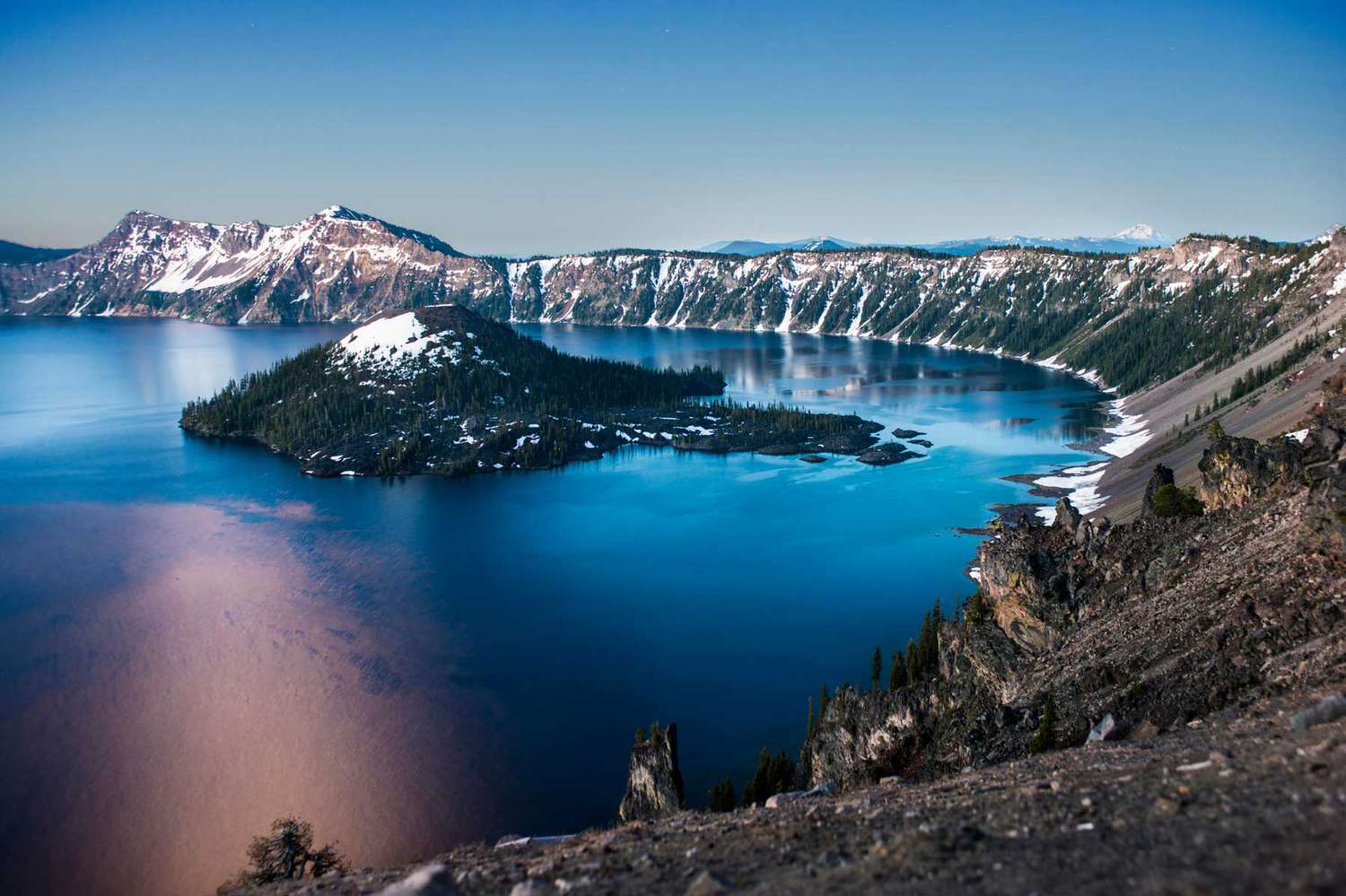
The designation of top lakefront experiences in america is frequently subject to the biases of social media curation and short-term marketing cycles, which prioritize visual symmetry and accessibility over genuine depth. To understand these experiences properly, one must first identify the common fallacy of the “universal lake”: the assumption that all large bodies of fresh water offer comparable utility. This is demonstrably false. A reservoir built for flood control and power generation in the South offers a vastly different utility profile than a natural, oligotrophic glacial lake in the North.
Misunderstandings arise primarily through the conflation of “scenery” with “experience.” A high-resolution image of a sunrise over a lake is a commodity; the experience of that lake involves the water’s chemical composition, the accessibility of its thermocline for fishing, the noise profile of the surrounding boat traffic, and the legislative history of the shoreline’s protection. The most sophisticated travelers recognize that the top tier of American lake destinations are those where human intervention has been balanced against the lake’s ecological carrying capacity.
True authority in this space is found by prioritizing “fit-to-purpose.” A destination is not objectively “top” unless the specific variables of the traveler—be it a desire for absolute quiet, high-adrenaline water sports, or historical preservation—are met by the lake’s inherent characteristics. Oversimplification risks treating the vast geography of the United States as a static resource, ignoring the seasonal and developmental shifts that define these regions over decades.
The Systemic Evolution of American Lake Tourism
The development of lakefront tourism in the United States follows a distinct historical trajectory, evolving from functional resource management to leisure-based consumption. In the late 19th and early 20th centuries, many of the most iconic lakefront hubs—such as those surrounding the Great Lakes or the Adirondacks—began as industrial or retreat sites for an elite class, often facilitated by rail expansion. These sites were defined by grand structures, deliberate landscape architecture, and a structured, slow-paced interaction with the water.
Post-World War II, the rise of the automobile and the democratization of the “summer cottage” model shifted the paradigm toward mass accessibility. This period saw the creation of massive reservoir projects (e.g., Lake Mead, Lake Powell) which essentially “manufactured” new lakefronts in arid regions. These projects introduced a new layer of complexity: the realization that water levels in these man-made environments are volatile, governed by agricultural demand and regional energy needs. Understanding this historical context is vital; the visitor to a naturally stable, deep-water lake faces entirely different variables regarding shoreline access and environmental longevity compared to one visiting a river-fed reservoir.
Contemporary trends indicate a shift back toward “authentic” and “resilient” experiences. There is an increasing premium on lakes that demonstrate sustainable management—places where shoreline development is strictly governed and where the water quality is actively monitored for long-term health. This maturation of the market suggests that the top lakefront experiences in america will increasingly be defined not by the luxury of the amenities, but by the integrity of the natural environment and the permanence of the surrounding public access.
Conceptual Frameworks for Selection
To navigate the breadth of options, one must apply specific analytical models. These frameworks help filter the noise of marketing and ground the decision in practical reality:
-
The Ecological Stability Model: Prioritizes destinations with minimal shoreline alteration, high water clarity, and robust, protected watershed zones. Ideal for researchers, conservation-minded travelers, and those seeking low-noise environments.
-
The Access-Density Gradient: Maps the distance between the primary human-use areas and the wilderness periphery. High-density areas offer convenience but reduce the capacity for solitude; low-density areas offer higher psychological rewards but require higher physical and logistical self-sufficiency.
-
The Utility-Purpose Matrix: A taxonomy that classifies lakes based on their primary output—fishing, motorized recreation, historical research, or contemplative solitude. Selecting a destination outside of one’s intended utility-purpose causes immediate friction and dissatisfaction.
-
The Seasonal Elasticity Framework: Evaluates how a lake’s “value” changes based on the calendar. Some lakes are strictly summer-bound, while others offer more depth in the shoulder seasons when the logistical pressures of peak tourism dissolve.
These frameworks force a departure from the “best of” lists and into a realm of deliberate choice based on individual requirements and constraints.
Categorization and Comparative Dynamics
Lakes can be segmented by their geomorphological origin, which dictates the visitor experience.
| Category | Typical Landscape | Primary Utility | Key Trade-off |
| Glacial Tarns | Steep, rugged, alpine | Contemplation/Hiking | High physical exertion |
| Reservoirs | Man-made, wide, canyon-bound | Motorized sports/Angling | Variable water levels |
| Great Lake Inland Seas | Vast, horizon-bound, stormy | Maritime activities | Unpredictable weather |
| Crater Lakes | High-altitude, isolated | Visual/Scientific | Limited shoreline access |
| Oxbow/Floodplain | Low-lying, riparian | Wildlife observation | Seasonal flooding/Insects |
When selecting from these, decision logic should prioritize the “limiting factor.” If one is traveling with a large group requiring motorized boat access, a remote, protected glacial tarn is a failure mode; conversely, if the goal is quiet, the high-octane environment of a developed reservoir is equally misaligned. The top lakefront experiences in america are ultimately those where the lake’s intrinsic characteristics align seamlessly with the visitor’s intended utility.
Detailed Real-World Scenarios
-
The High-Altitude Research Trip (Scenario: Sierra Nevada): The constraint is oxygen and access. The decision point is the timing of snowmelt, which dictates when the trailheads become accessible. Failure modes include improper gear for sudden temperature drops and lack of permit awareness. The second-order effect is a heightened appreciation for alpine ecosystems.
-
The Multi-Generational Reservoir Stay (Scenario: Lake Powell): The constraint is water management and safety. The decision point is the boat type relative to the lake’s current water level. Failure modes include mechanical breakdown in remote canyons and water-level-related dock inaccessibility. The second-order effect is the navigation of complex, human-modified geological terrain.
-
The Maritime Transit Experience (Scenario: Lake Superior): The constraint is weather and scale. The decision point is the safety rating of the vessel and the captain’s awareness of “Big Lake” hazards. Failure modes include underestimating sudden, high-force wind squalls. The second-order effect is a profound shift in one’s understanding of scale and danger in freshwater environments.
Planning, Cost, and Resource Dynamics
The economic impact of a lakefront trip is often underestimated due to the inclusion of “hidden” costs—marina fees, specialized water-craft insurance, and the premium on lake-adjacent real estate.
-
Direct Costs: Lodging, vessel rental/launch fees, permits, and conservation surcharges.
-
Indirect Costs: Specialized equipment (waders, navigation gear, high-grade optics), transport logistics, and premium fuel.
-
Opportunity Costs: The time lost to travel in expansive regions like the American West or the Maine interior.
| Budget Tier | Typical Resource Allocation | Expectation Management |
| High | Private access, custom transport | Seamless logistics, isolation |
| Medium | Public infrastructure, rentals | Shared space, high demand |
| Low | Wilderness camping, self-supply | High effort, high autonomy |
Tools, Strategies, and Support Systems
Successful engagement with the top lakefront experiences in america requires a specialized toolkit that transcends standard travel apps.
-
Bathymetric Charting Software: Essential for understanding the lake floor, especially for anglers and those navigating uncharted bays.
-
Hydrological Data Portals: State and federal tools that report real-time water levels and dam release schedules.
-
Satellite Imagery Analysis: Used for identifying “micro-shorelines” that are invisible on standard maps.
-
Ecological Status Reports: Local environmental agency documents detailing invasive species statuses and water quality indices.
-
Offline Logistical Redundancy: Physical paper maps and analog navigation tools in areas where cell coverage is nonexistent.
Risk Landscape and Failure Modes
Risk in lakefront travel is often cumulative rather than instantaneous. The most dangerous failure modes involve the intersection of human complacency and environmental volatility.
-
Environmental Compounding: A combination of cold water, wind, and distance from shore creates a high-leverage risk scenario. Many visitors, accustomed to pool or ocean safety, underestimate the rate of heat loss in high-latitude lake water.
-
Regulatory Failure: Relying on outdated information regarding lake access, permits, or private property boundaries.
-
Logistical Fragility: Assuming that a remote lake provides the same level of emergency response as a land-based, urban destination.
Measurement, Tracking, and Evaluation
For the serious traveler, documenting the experience is not about social media but about creating a personal archive of technical and environmental data.
-
Leading Indicators: Water quality reports, weather station trends, and booking scarcity—all of which predict the quality of the coming season.
-
Lagging Indicators: Total days spent on the water, the ratio of quiet versus motorized time, and the level of physical/psychological exhaustion after the trip.
-
Documentation: Maintain a journal that tracks not just the visual aspects, but the specific water conditions, the efficacy of the gear, and the legislative/developmental observations made during the stay.
Common Misconceptions and Oversimplifications
-
Myth: All lakes are “pristine” by default. Correction: Many reservoirs have significant industrial runoff or agricultural chemical buildup.
-
Myth: Summer is the optimal time for every lake. Correction: Peak summer often brings noise pollution and overcrowding; fall and spring frequently offer superior clarity and tranquility.
-
Myth: A “lake house” provides the best experience. Correction: Staying in a cabin or boat allows for a nomadic, multi-perspective engagement that a stationary house cannot match.
-
Myth: Motorized boats are necessary for engagement. Correction: Human-powered crafts allow for the exploration of shallow, quiet zones that larger vessels cannot reach.
-
Myth: All water levels are stable. Correction: Most human-managed lakes fluctuate significantly, altering the shoreline’s character daily.
-
Myth: One “lake trip” is sufficient to understand a region. Correction: Seasonal shifts change the biological and logistical realities of the lake entirely.
Conclusion
The search for the top lakefront experiences in america is, at its core, a pursuit of engagement with the specific, often hidden, dynamics of the American landscape. By eschewing the superficiality of generic travel recommendations and applying rigorous frameworks for selection, risk management, and environmental awareness, the traveler gains the ability to curate experiences of genuine substance.
Depth is not an inherent trait of a destination; it is an output of the visitor’s level of inquiry and their willingness to engage with the complexities of the environment. Whether one seeks the silent reflection offered by a high-altitude tarn or the maritime challenge of the Great Lakes, the most valuable assets are the ones that require the most considered preparation. True mastery in this domain comes from the understanding that the lake is not a passive backdrop, but a dynamic, ever-changing system that demands respect, analytical planning, and a sustained, iterative approach to exploration.